

"Between the Lines" with Jessica Knoll
A recap (and audio recording!) of my in-person interview with the New York Times Bestselling author of Luckiest Girl Alive. Her new novel, Helpless, is out July 7th.

It’s no secret that my love for reading—and deep admiration for the authors who write the stories I carry around with me—was one of the reasons I launched The Sunday Series back in 2020. Through this letter, I’ve had the opportunity to share (and receive!) endless book recommendations: everything from my annual recaps on my top reads of the year for the past five years to more niche experiments, like the time I paired forty New York restaurants to beloved books. My mind is constantly spinning on the axis of what books I’m consuming, what I want to read next, and how these stories shape the way I move through the world.
So it feels fitting that this morning unfolded as my ideal start to a Sunday: I woke up gently to my Hatch alarm, made an iced cortado in my Sunday Funday cup my friend Chelsea Martin got me, and burrowed back in Boll & Branch sheets to finish into the last 18% of Finding Grace by Loretta Rothschild. This book had me hooked from the beginning, but what I didn’t see coming was the full-body sobs evoked by the ending. Talk about catharsis.


Upon getting myself together, I immediately texted the West Village Book Club group chat about how sensational the book was. And in that moment, I was srtuck with a reminder: this is why I read. To feel deeply. To metabolize the emotions I’m feeling in my own life through fictional characters who often look quite different to me, yet connect me to my own humanity. This realization feels like the right emotional footing from which to open today’s letter.
But before we get into that fun, last week’s edition of The Sunday Series was all about diving into February with a clear eye towards all the magic ahead. If you’re looking for a gift for someone you love, don’t miss my Valentine’s/Galentine’s Gift Guide.
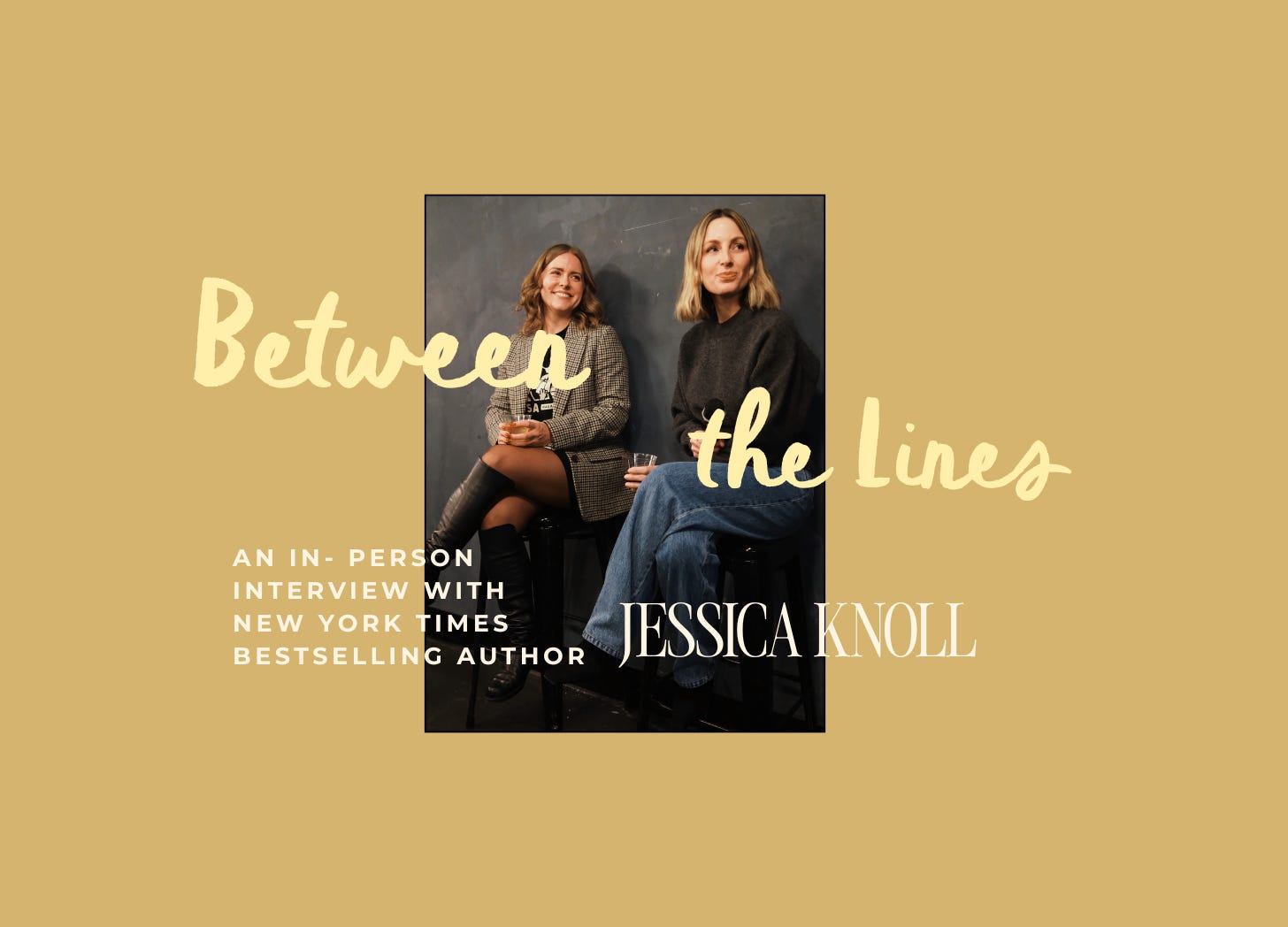
Now, into today’s edition! They say not to meet your heroes. But lucky for me, I seem to have quite a few—and the handful I’ve crossed paths with have almost always met, if not exceeded, expectations. On Tuesday, I had the opportunity to interview one of my author heroes, Jessica Knoll, as the kick-off to our West Village Book Club series we’re calling “Conversations on Creativity” in partnership with Murray’s Cheese. It felt fitting that the first installment of this in-person event series (be sure to subscribe to West Village Book Club if you want to be the first to hear about our next one!) began with Jessica, whose work explores the inner lives of women with her signature sharpness.
What followed was less of a formal interview and more of an open conversation about burnout, boundaries, social media, motherhood, writing badly on purpose, and the small daily rituals that keep the creative spark alive. Plus, as a bonus, paid subscribers have access to our full forty-four-minute chat as an audio file right here within Substack, so you can listen, podcast-style!
Kayla Douglas: What does your relationship to creativity look like? How has that evolved over the course of your career?
Jessica Knoll: I don’t know if I can, you know, if I can speak to it throughout my life, but I can speak to what my relationship is to creativity at this moment, which is surprisingly very good. I feel like I went through many years where I had many blocks, and I felt very frustrated. I felt very burdened. I don’t currently feel that way, and I owe that in big part, I think, to lightening my load.
I said “yes” to a lot of things for a couple of years that sounded really exciting, sounded like a sure thing, and I guess I had to learn the hard way that nothing’s a sure thing. No matter what A-list actress is attached to it, it’s not a go. But I still had to make my way through obligations that I had to people, and I finally delivered on some of those things over the last year, and I feel free in a way that has allowed my mind to really relax and come up with ideas that I’m really excited to kind of pursue and think through.
KD: And you mentioned actors being attached to scripts. I think everyone in the room knows that in addition to writing novels, you’re also a screenwriter. Can you give us a little bit of context—for those of us who don’t quite understand the difference—and what that means?
JK: When my first novel, Luckiest Girl Alive published in 2015, it was optioned by Lionsgate for film, and it was the time of Gone Girl, and Gillian Flynn was working with David Fincher, and she was going to write the script herself. And I just remember thinking, “If she can do it, I can do it,” you know? Like, I want to raise my hand. And so I pushed really hard to be the one to adapt it or at least take a go at it.
And it ended up becoming something that I loved. It really was a craft that I had to develop. So I did write the screenplay to that movie. Then from that, other opportunities appeared, which were not just adaptations of my own work, but adaptations of other books, adaptations of, like, viral Reddit stories.
I did one of those. It was, like, set up at Sony for a minute. [laughing] I’m just laughing, thinking about the actress who was initially attached to it because she’s currently a...I won’t say who, but she’s currently a very incendiary figure at the moment.
KD: Canceled, if you will?
JK: Yeah, canceled, if I will... but yeah, and then that, they were all like flops in the end. [laughing] Like, nothing went anywhere.
So I think those experiences taught me to be discerning, and to understand that my energy is—there’s a limit to it, you know? So I have to be smart about what I’m going to say yes to, and what I’m going to pursue, and what I’m going to pour myself into because I’m incapable of just doing something, you know...I just put my whole self into everything, and it consumes me.
And so to have multiple projects on my docket that felt consuming to me, but I wasn’t able to give my all to them, that was a really crappy feeling, and it made me very depressed for a couple of years.
KD: That makes perfect sense. You sort of already answered this…I’m starting to realize a bit of your creative themes at this point. But I’m curious, as you become more traditionally successful, if you will, have you felt more pressure around your creativity, or how have you navigated that?
JK: I’ve recently had this revelation that what excites me the most is things that I don’t have to do. So, for instance, Luckiest Girl Alive, I started writing that novel in 2012 or 2013. In fiction, especially for a debut novelist, you have to have the whole manuscript written for an agent to take it out and hopefully get you a book deal.
So I sat down, and I started writing it, you know, and it was—they say in the entertainment industry, it’s called on spec, which is if you write a screenplay for no money, and then try and sell it. So basically, novel writing is like writing on spec for a debut novelist. So I wrote that book, and it poured out of me, and it was because I had, um, there were no expectations. There was no one breathing down my neck. There was no deadline. It was just something I did for myself.
And after that, I started to discover different kinds of avenues of writing that engaged that same state of flow, and I noticed that they were all centered around things that were not already set up somewhere. So I think in 2019, I had an idea for a horror film, and I sat down, and I wrote my first script on spec, and I ended up selling it to Amazon. It’s still set up at Amazon. Like, it’s still in development.
Who knows? We have a director attached, a great director, but we’ve had one attached for many years, so I don’t, I don’t know what will happen there. The new thing right now is people are selling short stories basically as treatments for film and television. If you have an idea, and you feel like doing it, you do it, but no one is expecting it from me, and I have, like, three ideas that I want to write.
And so the lesson I’ve learned from that is, I think I do my best work and the work that feels the best to me, if I can somehow navigate a way that it doesn’t feel like I have to do it, right?
But sadly, there are still some things that I have to do to keep a roof over my head,[chuckles] so I’ll never be able to escape that part of it completely. But I do like searching for those little, kind of creative nooks and loopholes in there.
KD: So when you’re thinking about the difference between how you set up a workday these days versus when you wrote Luckiest Girl Alive before your job, when you were at Cosmo at that time. It’s a very different scope to be finding a couple of hours of writing before your full-time job versus the pressure of waking up every day now and having to produce. So what does a good creative day feel like now?
JK: It’s actually not that dissimilar to what I did with Luckiest Girl Alive, where I still do my, my best writing in the morning. I used to be really precious about it, and it had to be that I woke up, and right away, I got to it. If I had to do anything else before that, it was like the day was ruined.
Like, I couldn’t produce. It was very tortured. Now, [laughs] I’ve loosened the reins on myself a little bit, and it still is, you know, the first work thing that I can get to. Like, obviously, you know, I’m a mom now. I have to take my daughter to school. I have to feed her breakfast. I have to convince her to let me brush her hair.
So I have, you know, like, an hour in the morning where I’m doing lots of things that are very time and energy-consuming, but I’m using a different part of my brain to kind of complete these tasks. So I still try to reserve my mornings for my creative endeavors. I think something I also learned over the years is that I’m very hard on myself, and so, when I wrote Luckiest Girl Alive, I only had a certain amount of time that I could work on it in the morning before my real full-time job.
After I sold that novel and, um, and I was able to just do this full time, I thought that: “Oh, okay, I’ll, I’ll write all day.” I mean, show me a writer who writes all day. Like, it just doesn’t happen. You just, you burn out after...I mean, some people have a better motor than others.
But really, especially in the beginning of creating something or writing a book, I’m really only good for, like, two hours. Sometimes I’m only good for one, and that was really hard for me to come to terms with. I would force myself to sit at my desk all day long, and then I would just berate myself because I wasn’t writing.
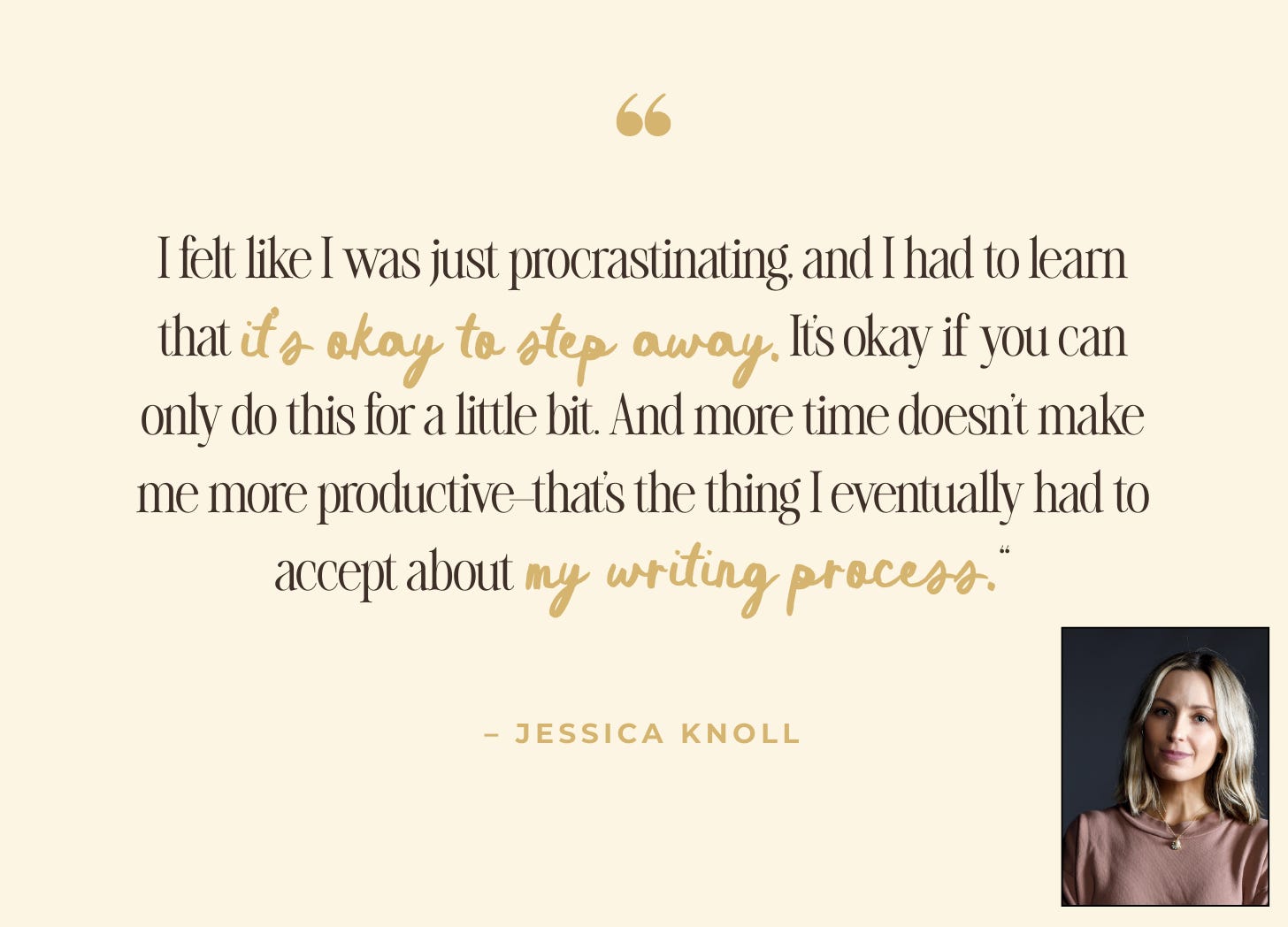
I felt like I was just procrastinating, and I had to learn that it’s okay to step away. It’s okay if you can only do this for a little bit. And more time doesn’t make me more productive—that’s the thing I eventually had to accept about my writing process.
KD: Besides writing for you, where else does creativity show up in your life?
JK: It shows up in really small ways. I think the walk home from my daughter’s school is when I just feel so excited about something I want to sit down and write or something I’m working on. It’s when I’m able to kind of unlock certain plot problems that I’m having. And it’s not a long walk. It’s like a twelve-minute walk, but I really cherish it. And showering.
Weirdly, it’s warm, and it’s relaxing, and I think I relax, and I just…I don’t know. My mind is at ease, and also at night, if I’m woken in the middle of the night, you know, my daughter wakes up or whatever, and I’m having trouble falling back asleep, I’ll try and, like, work through a plot hole, and it really soothes me, soothes me to sleep. So I find it in little moments throughout the day.
KD: Okay, so you’ve sort of touched on this, but I’m very curious, moving back to New York from LA, how that’s influenced your daily life, your approach to writing. I’ve been lucky enough to get my hands on a copy of Helpless, which we are also going to get to! But there is a line, and you reference the protagonist basically memorizing something somebody said to put it in their notes app. And I think as a writer, that’s such a real thing, where you’re like, “Wait, I’m watching this scene unfold in front of me in a restaurant. There’s so much happening in New York, you know, than where you go.” So how has that changed your approach?
JK: Yeah, I felt very isolated in LA. I felt like I got stuck in my house a lot. It was very hard for me to leave. I run kind of depressed anyway, and then you add, like, Lexapro to it. You’re, like, a little flat. [laughing] Yeah, it’s great, but, like, it doesn’t help me to get the motivation sometimes to get dressed. I had to deal with LA traffic, and I would have many days where I would not leave the house. And even when I became a mom, because she was still a baby, so it wasn’t like she had to go to school, I didn’t really have any reason to take her out of the house. And I always had bulldogs, and they’re super lazy, and they don’t walk. So that didn’t help me either.
The thing that I loved so much about moving back to the city this summer was how easy it was to leave the house. For someone who’s organized like me, it is the only way for me to get out into the world is the fact that I can just step right outside my door and everything is right there.
So I think New York has just put me back into the world in a way that I was really missing.
And you’re totally right. It’s the conversation. It’s like, I had a parents’ meeting this morning after I dropped my daughter off to school, and there was this—I’m working on this character right now, and there was just this dad who was sitting in front of me, and I’m like, “This is the character I was envisioning,”... exactly how he’s dressed. Like, he was so dapper, and he had a shaved head, and he kept running his hand over his bald head, and I was like, “What a great gesture,” you know? [laughing]
Dialogue, like, someone’s got to be doing something, you know? And I was writing it in my notes app. The parents behind me are like: “Why is she, like, texting right now?”
So yeah, New York just made me a part of the world again in a way that I think is good for my mental health as well as for my creativity.
KD: That makes so much sense. As we started to explore “Conversations on Ceativity” as an event series, you seemed like the most natural fit for someone we want to speak to in this space. I’m a huge fan of your IG stories on cooking. Tell us a little bit more about how being in the kitchen unlocks anything creatively.
JK: Well, I don’t want you to oversell me because I’ve all but stopped cooking since moving to New York. People, people will message me and say, like: “I miss your cooking videos.” And it’s kind of weird, I’ve never talked about this, but, I think I started really filming my cooking videos around the pandemic because, again, stuck in the house, there was nothing to do but to, but cook and drink and doomscroll, and that was the only thing giving me the will to live: coming up with new recipes and fun new cocktails to make.
But then it became this thing where I felt pressure to do it. Like, I knew people liked it, and people would always ask me about it. And I think when I got to New York, nothing compares to the takeout scene. I think it was also just so exciting to have new restaurants to order from. Like, you burn out on everything after a while, you know? So I think the novelty—I moved to LA in 2016, so all my New York restaurant preferences were also squarely stuck in 2016. So I was ordering Meatball Shop and Bareburger.
And I couldn’t get enough of these places that were those were the places that I was obsessed with when I left. So then I burned through those pretty quickly, and they kinda lost their luster, as everything does. But I’m still...I don’t know. I’m still really in my takeout moment. The kitchen that I’m in right now is not that great, and we’re looking to find a more permanent spot. So hopefully, if I have a kitchen that feels more inspiring to me, then I’ll do better work then.
KD: Well, you touched on something that I’m actually kind of curious about delving into, and that’s the performance of social media. As an author, knowing that it’s a vehicle for you to promote your work, but also, be a person in the world. How do you think about—let’s use Instagram specifically—that channel, and how do you navigate the boundaries that you’ve decided feel good for you there?
JK: Instagram has always felt very easy and natural to me in a way that Twitter never did. Now, X. But, I got rid of it when it was still Twitter because I was like: I’m just, like, I’m embarrassing myself on this. I was trying to be, like, quippy, and it just wasn’t hitting.
Whereas Twitter felt very numbers-driven, so does, obviously, the main grid on Instagram. I attempted TikTok, and I’m like, I love it as a lurker, but, I’m too old. I don’t have the natural touch, you know? I’m firmly an elder millennial who just gets Instagram stories.
And it works for me, and so, like, I’m gonna stick with what’s working for me. I think because of that, I have natural boundaries around it. Sometimes I get self-conscious that I don’t have much going on beyond being a mom. And I’m like: Oh, is that boring? Before I was a mom, I thought kids were so boring. But now I think they’re all precious and cute. [laughing]
I got a dog. I didn’t think all dogs were cute until I got a dog, and I was like, “Every dog is beautiful.” [laughing] I feel about children now. Like, I can’t believe I was such a Grinch before. And I love seeing people’s kid posts, so I’m like, I don’t know. Hopefully, most people out there are, like, aren’t as bitchy as me, and they think my kids are cute. But then it also becomes a weird thing because I’m like, she’s growing up, and then, like, am I violating her privacy? I’m gonna model myself after Andy Cohen’s approach, which is once they get to be, like, three or four, he keeps them off camera. I mean, but don’t, don’t pin me down on that.
KD: Well, this is a great transition to talk about your upcoming novel, Helpless, out in July. We’d love to know more about why this story felt relevant for this moment in your career, and what called you to this story?
JK: Yeah. So this book is a departure for me in that it is, um, very sexually graphic. Which is an awkward conversation to have, keep having with my mother-in-law, which is like, “Don’t you have an advanced copy?” And I’m like: “Barbara, I can’t send you a copy of this book. Please, I hope to have a long career, and maybe the next one will be for you.” [laughing]
It’s an erotic thriller, um, emphasis on erotic.
I don’t think I’m far enough out of it yet to really understand why I felt I had to write this book. But I will say, I went through looking all around, and it’s like, okay, Colleen Hoover is off the charts, like all the Romantasy series. Like, I got in deep with A Court of Thorns and Roses. There was, like, six months of my life that I disassociated with those novels. Like, I only thought about Nesta and Cassian, and I was like, what has come over me? And I became obsessed with finding erotic things to read that also felt dangerous. And I just felt like there was limited inventory with writing that also felt good to my eyes. You know what I mean? So I read Susanna Moore’s In the Cut, which, oh my God, talk about a great New York City erotic thriller. Like, oh, my gosh, it’s super, super nasty.
It’s so good. And, I mean, Susanna Moore's writing is unbelievable. Ali Hazelwood is also a very intelligent writer, and I liked her paranormal series because I like darkness. So I find that normally her stuff is so well written, it’s still not, still not bloody enough for me. [laughing]
So I was like, I want to write a book that I want to read, and I’ve never really had that feeling before.
And I was like, I’m literally going to create a f*cked up fantasy that’s, like, in my head. And I don’t know, I just always assume everyone is as f*cked up and demented as I am,[laughing], and some people are reading this, and they’re like, “Whoa, Jess,” like I don’t know. So I’m giving everyone a fair warning. But, I did have something to say, right? About what pop culture trends and the way that they kind of uphold certain standards around women’s subjugation, and why it is that we ourselves even seek it out and sometimes even fantasize about it.
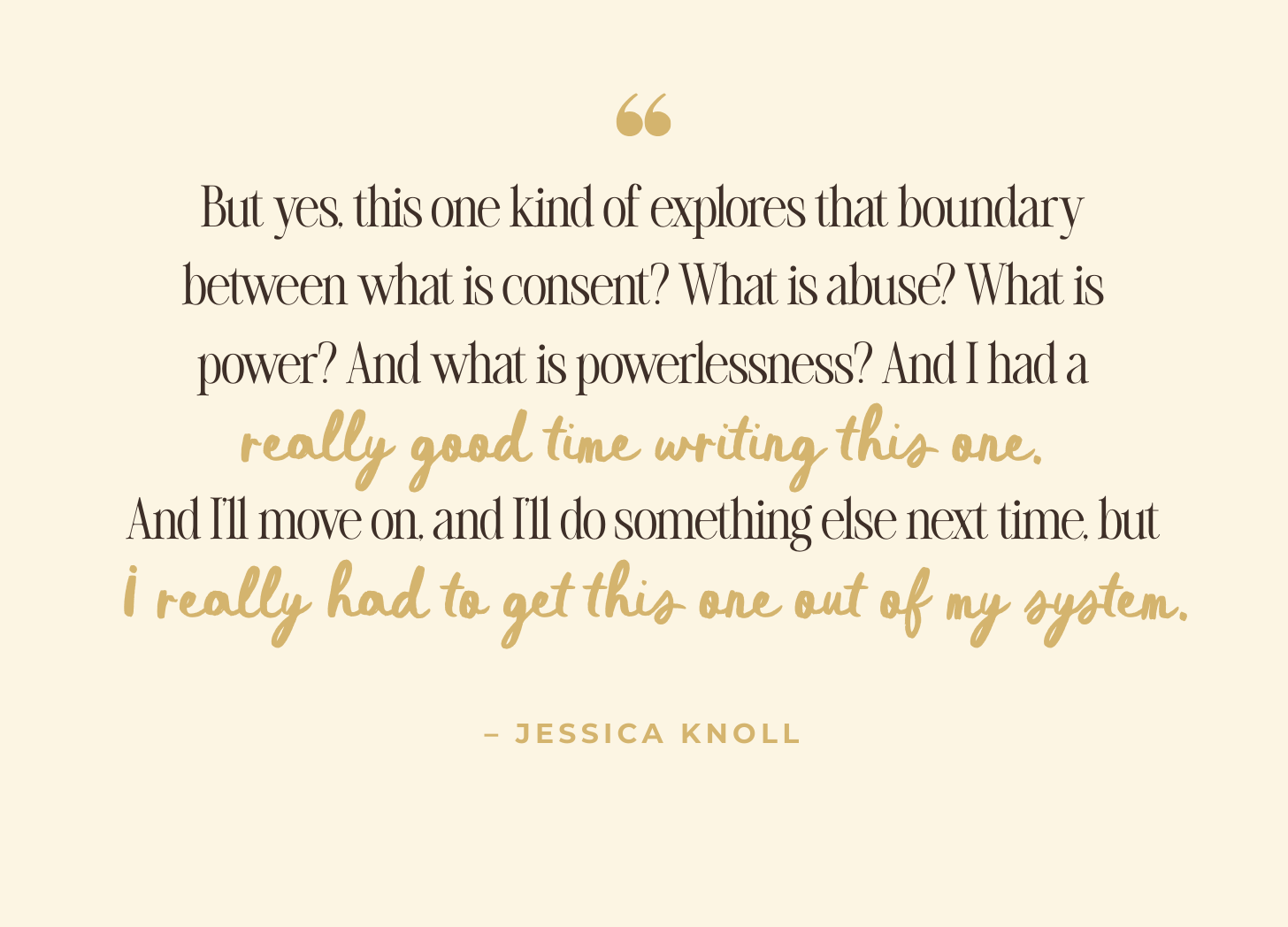
And I think that we’re seeing that everywhere. We’re seeing that with trad wives on TikTok. We’re seeing that with a BDSM version of Wuthering Heights, you know, and it’s like: Why do women fantasize about this, right? And that’s what the novel strives to answer. So you said you’ve only just started it, so I hope by the end you’ll feel that I’ve delivered my own kind of commentary on that, because that is what I set out to do. But yes, this one kind of explores that boundary between what is consent? What is abuse? What is power? And what is powerlessness? And I had a really good time writing this one. And I’ll move on, and I’ll do something else next time, but I really had to get this one out of my system.
KD: One of the things that immediately jumped off the page to me is just, you’re so good at voice, and I feel like your novels, for lack of a better word, are just so voicey. And that was something that really stood out to me as coming back into one of your stories, like, ‘oh, this feels familiar.’ And does that just come naturally to you? I don’t like to use the vernacular, ‘unlikable narrator,’ but it feels like you write these women who are complicated and complex, and in ways you don’t want to villainize them. So how do you think about that?
JK: I don’t have an issue with the unlikable narrator language. That doesn’t bother me because to me, what makes someone unlikable is...this sounds so pop, but it’s, like, actually what makes them likable, right? Which is, like, that they’re willing to be honest about their shortcomings and their flaws and their deepest, darkest, thorniest thoughts. And I find that interesting because it makes me feel less alone in the world.
I’m like, there’s someone out there who, you know, is as kind of brutal as I am towards myself, towards others. I just think women probably have—most women just have such a harsh inner dialogue with themselves. At least, I do. And so I think that it comes easily for me to write like that, to write that voice in, in your head that you don’t feel safe enough using with other people. I find it to be very comforting to write these characters and to put them out there into the world, and to hear from people that they can relate to them. It makes me feel more connected.
KD: And I feel like anyone in the room who’s read Stephen King’s On Writing, his advice that you’re supposed to write at least the first draft, like, no one’s ever going to read it. Intimating certain people that you’re pulling reference points from. How do you think about that when you write a first draft versus when you’re editing?
JK: Writing with the door closed in terms of maybe the values of the character or the ethics of the story, that always feels easy to me. I can do that, and then I’m always surprised if there’s backlash, I’m like, “That is not, uh, not what I thought people would have issue with.” Where I struggle with writing with the door closed—which is an important part of the writing process—is writing badly.
It’s very hard for me to write a couple of pages that are just, like, shit writing just to kind of figure out the character and figure out the plot. I spend so much time trying to craft the sentence, and so my takeaway from that advice—writing with the door closed—is it’s okay. I mean, there’s this terminology people use, “the shitty first draft.” It’s okay for it to be a shitty first draft; no one’s going to read it. That’s my kind of hump that I’m always trying to get over. But the darker thoughts or characterizations, those all feel pretty easy. I don’t know what that says about me.
KD: No, I love it. Well, you mentioned shitty first drafts. Are you a plotter or a pantser?
JK: I’m definitely more flying by the seat of my pants. Although, I used to say that, but the more I do this and the more experience I get, I’m better at plotting, but not in a way that’s like I’m ever gonna make an outline, right? It’s like I can hold certain kinds of coordinates in my head and write from A to B, B to C, C to D. Whereas I think when I was first starting out, I only knew, like, I know what A is, and I know what Z is, but I don’t know what anything else is in the middle.
KD: So you knew the ending for your original, like your previous novels, you were writing to a particular ending?
JK: Yeah. Mmhmm. But now, Ican see a midpoint. I can see the arc a lot more clearly now. And I think that that’s just like a matter of experience, and it’s taken ten years, so, and I didn’t think it would ever happen, so I’m like, “I’ll take it.” But yeah, it comes a little easier now.
KD: I love that. So, in terms of people that are picking up Helpless, we talked about the voiciness of your novel always kind of being at the forefront, but what, for your readers of previous novels, do you think they’ll be like, “Ah, yes, this is a Jessica Knoll novel?” We talked about what’s different, but what’s the same?
JK: I think this one is a spiritual successor to Luckiest Girl Alive. My agent keeps saying that, and I think she’s right. There is something familiar, I think, between Faye, who’s my main character, and Ani, who’s my, my first main character. I think if anything, my last book, Bright Young Women, was probably the one that feels the most like, which one doesn’t belong, you know?
KD: Yeah.
JK: But in a way that I loved, and I want to return to again. But that one’s a little bit of a crowd pleaser. It’s one that my mom is so proud of. She had her book club read it, and I signed all their books, and I’m like, “You’re not gonna wanna do a book club with this one. But the next one, I promise, I promise I will write a book that you and Renee can feel good about…”
KD: For people in the room who aren’t as familiar with that novel, why did that approach...a Ted Bundy-inspired-story. Tell us about that.
JK: It’s my only novel that’s not set in contemporary times. So it’s a fictional imagining of the lives of the women who were affected by the serial killer Ted Bundy. And in the novel, I don’t name him. I only refer to him as the defendant. And there was a lot of research involved in this one. It’s the one that’s kind of closest to historical fiction. I spoke to some of the survivors. I read all the court transcripts, and I was a little nervous, like, can I realistically set a book in the nineteen seventies told from the perspective of young women in college? Am I going to get the lingo right? Is it gonna sound stilted?
And I’m really glad I pushed myself, and I’m really proud of that novel, and I’m actually working on an adaptation of that for a TV series right now. And the executive said, “You know, as much as you can to bring in the language of the seventies,” and I felt that same kind of nervousness again because I’m like, “I don’t want this to be hokey,” you know? Like, this isn’t my natural habitat. But it’s been really—I mean, I don’t want to say ‘fun’ because it’s obviously a very serious crime, and the survivors are very traumatized by it still to this day. But there is something about returning to the archives, I think, that feels like you get to create this world, and you get to live in it, and you get to really be enveloped by it. And that was my favorite part about writing that novel.
I loved going back into that world. I loved imagining the house that the girls lived in. I loved imagining their friendships and their strength. Not just imagining it. It was all there in the research. They were really extraordinary—what they went through and how they held their heads high throughout all of it. So I’ve been enjoying returning to, to those girls and to those characters.
KD: Our last question before we turn to audience Q&A, knowing how different your previous novel was from this one, how did Helpless challenge you differently from a creative perspective than your previous work?
JK: Well, it’s ultimately, I mean, it’s a f*cked up one, but it’s a romance in the end [chuckles] That has its own rules…I mean, it’s a dark romance, and there’s thriller components, and there’s murders, and there’s a mystery that’s unfolding. But I didn’t realize I was writing a romance until I got to the end of it, and that kind of has its own set of rules. I like to play in genre, so I don’t necessarily feel bound to, like, rules of a certain genre. But I did find that kind of coloring within the lines on this one, in my own way, to be very challenging.
But I think that I’m so proud and happy with how I figured it out and how I feel like I did it in my own way, in a way that also honors the genre. So I don’t know. I mean, people will have to read it and tell me if they feel the same, but I feel good about it.

Thank you for reading/listening! I loved this conversation so much. Jessica’s forthcoming novel, Helpless, hits shelves on July 7th. WVBC set up a special signed pre-order link (!!) if you want to secure your copy now.
Catch you next Sunday from Milano, where I’ll be spectating the Olympics!!!!! And don’t worry, upon return, as ever, I’ll share where we stayed, dined, drank, and shopped. In the meantime, as Euro fever sets in, don’t forget we have: The Paris Guide, The Mallorca Guide, The Balearics Guide, and so much more in the archives.
